
5.2.3 Microbiome
Introduction
The microbiome, predominantly in the gut, has been described as a biological and metabolic regulator of various organs and diseases (Chen, 2021). The gut microbiome, which is the most widely studied, contains 100 trillion organisms, making up approximately 1.6% of total body weight.
The microbes from one system affect the human tissues of another system, through the release of metabolites such as short chain fatty acids (SCFAs). Microbial-derived metabolites contribute to local gut health but also circulate to affect distant organs, including the brain, oral cavity, skin, immune system and more. The Holobiont Theory represents a paradigm shift in understanding our health, in that it suggests that the host is inseparable from its associated microbiome and that they have a symbiotic relationship.
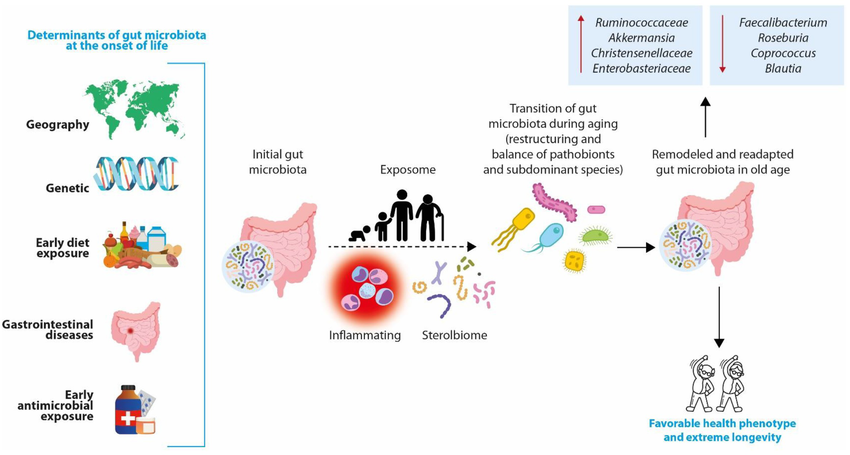
Figure. The Microbiome and its interaction with other Health Risk Factors Source: Day & Hitchcock, 2023.
Link Between Microbiome and Health Outcomes
The delicate balance of the gut microbiome, if disrupted, referred to as gut dysbiosis, has been linked to a greater risk for obesity, Type 2 diabetes, inflammatory bowel disease, coeliac disease, liver disease, colon and liver cancer, Alzheimer’s disease, Parkinson’s disease and age related macular degeneration.
There is a bidirectionality to many of these relationships, which has been shown in obesity, depression, Parkinson’s disease and more.
The science behind the significance of the microbiome for promoting healthspan and lifespan is still emerging, but it has emerged as a potential factor associated with the favourable health phenotype that enables extreme longevity and healthy ageing, as seen in Centenarian populations who are more likely to survive beyond the age of 100 (Martinez et al., 2024).
A Strategy for the Microbiome and Health
The human microbiome’s composition and functionality significantly shift throughout various life stages, impacting health and disease susceptibility.
The natural history of the gut microbiome predominantly develops in the early years of life, with the most significant changes occurring in the first few months after birth. However, changes to the microbiome later in life can significantly impact the process of ageing . Understanding the microbiome across the life course is essential for developing targeted interventions for healthy ageing.
Considerations by Age Groups
Prenatal
Prenatally, the mode of delivery is a critical determinant of microbiome establishment. Infants born via vaginal delivery are exposed to maternal vaginal microbiota, which fosters a diverse microbial community crucial for immune development. In contrast, cesarean section (C-section) delivery can lead to a microbiome that is less diverse and more similar to that found on the skin, potentially contributing to greater risks of immune-related and metabolic disorders later in life, including obesity and diabetes. Future innovations promise to tackle this issue.
Ages 0-4
By 6 months of age, the microbiome composition of exclusively breastfed infants tends to stabilize, due to breast milk providing both a nutritional resource and a source of beneficial bacteria (Biagi et al., 2018). Whilst the external environmental factors and diet continue to influence microbial development, the groundwork for a healthy microbiome is largely laid during the first year of life. There should be a strong focus on breastfeeding for as long as possible up to age 2. Innovations in infant formula are set to factor in the importance of the first few months of life in establishing the baby’s gut microbiome.
Ages 5-14, 15-22
As children progress into later childhood and adolescence, the microbiome continues to evolve with shifts in dietary patterns and lifestyle factors that affect gut health. The consumption of processed foods and sugar-laden diets can lead to dysbiosis, increasing the risk of chronic diseases, including obesity, type 2 diabetes, and metabolic syndrome.
Ages 23-36, 37-54
Entering adulthood, lifestyle choices such as physical activity, diet, and stress can further influence microbiome composition, with significant associations observed between gut health and mental health disorders such as anxiety and depression (Krakovski et al., 2022).
Ages 55-70 and 70+
In middle and older age, the process of ageing is marked by decreased microbial diversity and increased prevalence of pro-inflammatory bacterial species, heightening the risk for chronic diseases like Alzheimer’s and Parkinson’s disease. Dysbiosis in older adults has been linked to cognitive decline and age-related macular degeneration, emphasizing the microbiome’s role in systemic inflammation and neurodegeneration (Varesi et al., 2022).
Policy
Improving gut health at the population level is increasingly recognized as essential for enhancing overall health and preventing chronic diseases. To effectively address this, a multifaceted policy approach is necessary, including food reformulation, research into the human microbiome, and targeted interventions at multiple levels.
Policy Interventions
Several strategic policy interventions could be adopted to enhance gut health at scale:
Nutrition Education Programs: Implementing comprehensive nutrition education initiatives across schools, communities, and healthcare systems can raise awareness of the importance of gut health and promote healthier dietary choices.
Regulatory Standards for Food Products: Establishing regulations that mandate the fortification of food products with beneficial bacteria and fibre can support public health goals, for example by promoting the inclusion of functional ingredients that benefit gut health
Supporting Local Agricultural Practices: Encouraging agricultural policies, for example subsidies, that promote the cultivation of high-fiber and nutrient-dense crops can enhance food security while simultaneously fostering a healthier gut microbiome.
Integrating Microbiome Health into Public Health Policies: Making gut health a central focus of public health policies involving chronic disease prevention and health promotion can create a more systemic approach to improving population health.
Research into the Microbiome: A deeper understanding of the gut microbiota’s role in health can inform dietary guidelines and health recommendations. Policies that support microbiome research can lead to innovative advancements, such as personalized nutrition strategies based on genetic and microbiome profiles.
Private Sector
Self-directed strategies for enhancing the microbiome can complement broader public health policies, for example through dietary supplementation (probiotics, prebiotics, and postbiotics) and personalized nutrition approaches that address the microbiome. This is a rapidly growing field and some interventions are listed below:
Lifestyle Interventions
In addition to supplementation and personalized nutrition, individuals can implement lifestyle changes that support gut health:
- Balanced Diet: Consuming a diverse diet rich in whole foods, including fruits, vegetables, whole grains, lean proteins, and healthy fats, can promote microbiome diversity, which is vital for good health.
- Regular Exercise: Engaging in regular physical activity has been associated with a more diverse microbiome. Exercise can stimulate the growth of beneficial bacteria and produce short-chain fatty acids that are beneficial for gut health (Zawistowska-Rojek & Tyski, 2022).
- Stress Management: Chronic stress can negatively impact gut health. Techniques such as mindfulness, yoga, and adequate sleep can reduce stress levels and promote a healthier microbiome (Moustakli et al., 2025).
Dietary Supplements
- Probiotics: Probiotics that can be found in specialized supplements or in fermented foods such as yogurt and kefir, have been shown to alleviate gastrointestinal disorders eg antibiotic-associated diarrhoea, enhance immune function and improve overall gut health (Zawistowska-Rojek & Tyski, 2022).
- Prebiotics: These are non-digestible food components that specifically stimulate the growth of beneficial gut bacteria and are linked to improved metabolic health and immunity (Morales-Ferré et al., 2021). Foods high in prebiotics, such as onions, garlic, and bananas, can be incorporated into a regular diet, and prebiotic supplements are also available.
- Postbiotics: These are metabolites of probiotic bacteria that can exert health benefits eg, they may support gut health by reinforcing gut barrier function and modulating inflammation (Aggarwal et al., 2022). They can also be found in fortified foods and supplements.
Microbiome Testing and Personalized Nutrition
- Personalized nutrition based on microbiome data can lead to more significant health improvements than generic dietary advice alone. Individuals who receive recommendations tailored to their microbiome tend to report better digestive health and efficacy in maintaining weight or managing metabolic conditions compared to those who follow standard nutrition guidelines (Pedroso et al., 2024).
- Engaging in microbiome testing allows individuals to receive tailored dietary advice based on their unique microbiome composition which could be clinically helpful in gut health disorders. Such services, eg by companies Zoe and Viome health, analyze gut bacteria and provide personalized recommendations aimed at optimizing gut health and overall well-being (Pedroso et al., 2024).
- Real world data from Zoe consumers, used in the PREDICT study, demonstrated that individuals with higher gut microbiome diversity tend to exhibit better metabolic health outcomes, including improved insulin sensitivity and glucose regulation, and that diverse and fibre-rich diets play a crucial role in influencing microbiome composition (Berry et al., 2020). It also developed predictive models capable of forecasting individual metabolic responses to specific foods based on their baseline microbiome characteristics, emphasizing the potential for personalized nutrition strategies to optimize health and mitigate chronic disease risks.
- 5.1 Introduction
- 5.2.1 Cognitive health
- 5.2.2 Oral health
- 5.2.3 Microbiome
- 5.2.4 Cellular ageing
- 5.3.2 Senolytic drugs
- 5.3.3 Peptide based therapies