
5.2.4 Cellular ageing
Cellular aging is a fundamental biological process that leads to the progressive decline in the function and structure of cells over time (Hayflick & Moorhead, 1961). It is distinct from chronological aging, which simply refers to the number of years a person has lived. Cellular aging is driven by a combination of genetic factors and environmental stressors, and is a major contributor to the development of chronic diseases and overall decline in health. Understanding the mechanisms of cellular aging is key to developing interventions that promote a longer “healthspan”—the period of life spent in good health.
Hallmarks of Cellular Ageing
Scientists have identified 12 key “hallmarks” that characterize cellular aging as shown in the figure below.
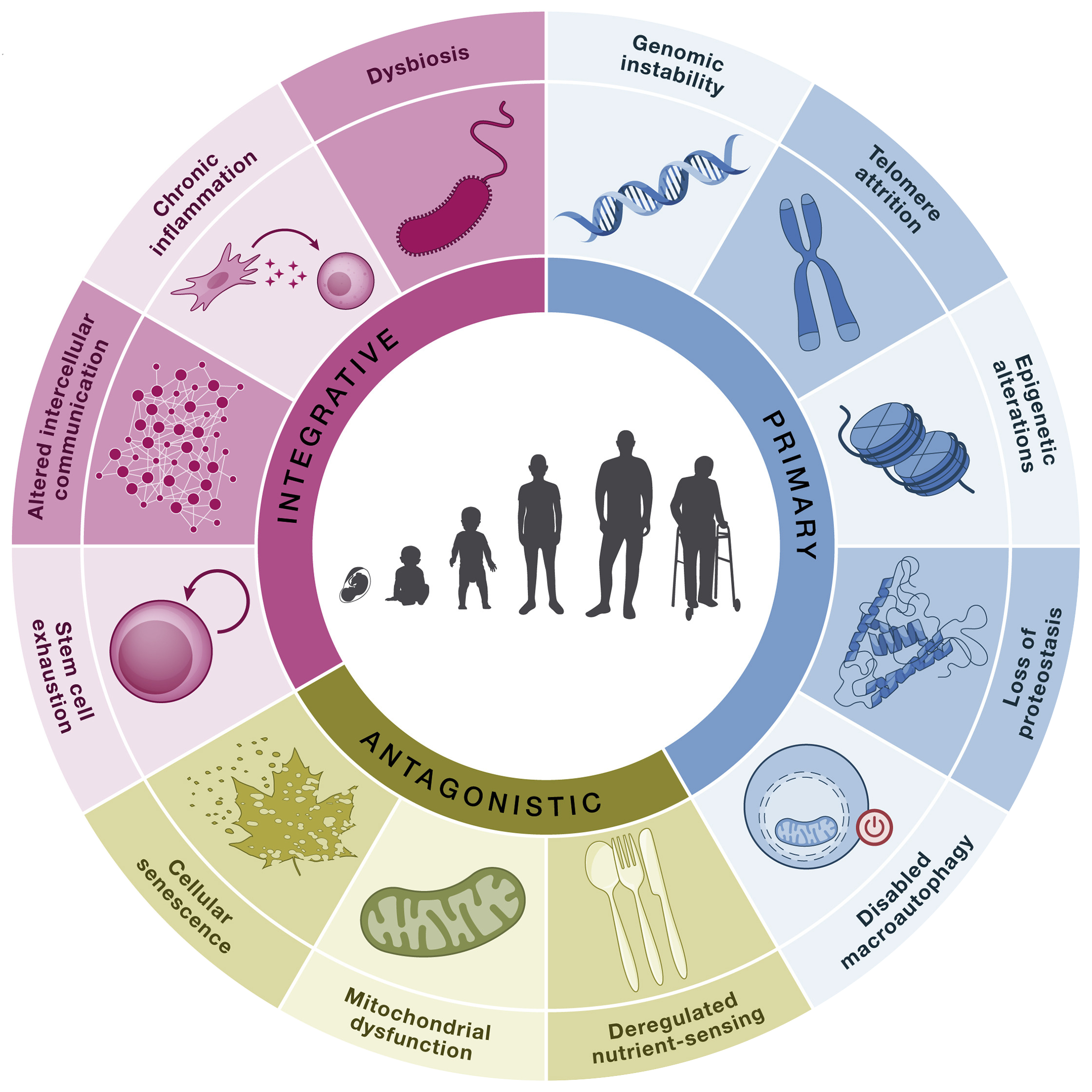
Figure. Twelve Hallmarks of Ageing Source: López-Otín et al., 2023.
These include genomic instability, where DNA damage accumulates over time; telomere attrition, the shortening of the protective caps on the ends of chromosomes with each cell division; and epigenetic alterations, changes in DNA methylation and histone modifications that alter gene expression without changing the DNA sequence (López-Otín et al., 2023). Other hallmarks include the loss of proteostasis (the balance of protein production and degradation), mitochondrial dysfunction, and the accumulation of senescent cells themselves, which secrete pro-inflammatory molecules.
Other discoveries in the field of cellular aging include the Hayflick limit, which refers to the finite number of times a normal human cell can divide before it enters a state of permanent growth arrest (Hayflick & Moorhead, 1961). This phenomenon is primarily driven by the shortening of telomeres, the protective ends of chromosomes, which get shorter as a cell ages. When they reach a critically short length, the cell stops dividing to prevent DNA damage, a process known as cellular senescence. This mechanism is a powerful anti-cancer defense, but it also contributes to the aging of tissues as the pool of dividing, healthy cells diminishes (Blackburn, 2005).
Prevention of Cellular Ageing
The prevention of cellular aging is a core focus of modern health and longevity research, with interventions designed to target the key hallmarks of the aging process.
Lifestyle choices can significantly impact the rate of cellular decline. Regular physical exercise has been shown to improve mitochondrial function and increase telomerase activity, the enzyme that helps maintain telomere length (López-Otín et al., 2023), in particular HIIT and resistance training. A plant-rich diet, particularly one high in antioxidants and anti-inflammatory compounds, can help reduce oxidative stress and support autophagy, the cell’s “self-cleaning” process (Mattson et al., 2017).
Senolytics are a class of compounds that selectively eliminate senescent cells that accumulate with age and secrete pro-inflammatory molecules (Baker et al., 2011). Examples include dasatinib and quercetin (D+Q), fisetin and navitoclax. These are covered in more detail in the Dietary Supplementation Section of this chapter. While still largely in the research phase, this approach holds promise for reducing the burden of aged cells that contribute to chronic disease.
Supplementation with compounds such as resveratrol and NMN (nicotinamide mononucleotide) are being investigated for their ability to activate sirtuins, a family of proteins that regulate cellular health and are linked to longevity (Sinclair & LaPlante, 2021). These are covered in more detail in the Dietary Supplementation Section of this chapter.
Cold and heat exposure are also gaining attention for their anti-aging effects. Brief exposure to cold, such as through cryotherapy or cold showers, can activate a stress response that increases antioxidant production and improves cellular resilience. Similarly, heat exposure, like from saunas, has been shown to induce heat shock proteins that protect against protein damage and improve proteostasis (the balance of protein production and degradation) (Laukkanen et al., 2015). These hormetic stressors—low-dose stressors that are beneficial to the body—help cells become more robust and resistant to future damage.
Light therapy is another emerging field in anti-aging. Red and near-infrared light therapy can penetrate the skin and stimulate mitochondria resulting in increased ATP production, reduced oxidative stress, and improved cellular repair, thus helping to combat mitochondrial dysfunction, a key hallmark of aging (Avci et al., 2013). While more research is needed, this non-invasive therapy offers a promising avenue for improving cellular vitality.
Together, these diverse interventions illustrate a multi-faceted approach to preventing cellular aging, moving beyond simple lifestyle changes to a more targeted, and in some cases, personalized, strategy for promoting long-term health.
Biological Age Scoring
While chronological age is a fixed number, biological age is a dynamic measure of a person’s physiological and functional health. It reflects the true age of a person’s cells and tissues, which can be older or younger than their chronological age. The major categories of biological age scores include those based on DNA methylation, telomere length, and glycation, with each offering a unique window into a different aspect of cellular aging.
DNA methylation: is a key epigenetic modification where methyl groups are added to DNA, affecting gene expression. These patterns change predictably with age, leading to the development of epigenetic clocks. These clocks, such as the widely cited Horvath clock and GrimAge, analyze methylation at specific sites (CpG islands) across the genome to estimate a person’s biological age (Horvath & Raj, 2018). Epigenetic clocks are considered highly accurate predictors of chronological age and are also a strong predictor of all-cause mortality, often outperforming traditional risk factors. While the Horvath clock is a pan-tissue clock that can estimate age in various body parts, GrimAge, for example, is more specialized, incorporating methylation patterns that are proxies for smoking pack-years and immune cell counts to predict mortality risk more effectively (López-Otín et al., 2023).
Telomeres: are the protective caps at the ends of chromosomes. With each cell division, they progressively shorten, a process known as telomere attrition. This is often described as a cellular “mitotic clock” because once telomeres become critically short, the cell enters senescence, or permanent growth arrest (Blackburn, 2005). Shorter telomeres are associated with an increased risk of chronic diseases and a higher rate of aging. While telomere length can add predictive power to chronological age, it is considered less accurate and reliable as a single biomarker than epigenetic clocks, as its measurement can be influenced by lifestyle factors, genetics, and stress (Loprinzi et al., 2018).
Glycation: is a process where sugar molecules, without the controlling action of enzymes, attach to proteins and lipids, forming Advanced Glycation End-products (AGEs). This process can lead to the stiffening of tissues, chronic inflammation, and oxidative stress, all of which are hallmarks of aging. Biological age can be measured by analyzing the glycation patterns of proteins, particularly on Immunoglobulin G (IgG) antibodies. This is the basis for tests like GlycanAge. The glycan clock, as this measure is called, has been shown to be responsive to lifestyle changes like diet and exercise, making it a valuable tool for monitoring the effectiveness of interventions aimed at reversing or slowing down biological aging (Krištić et al., 2014).
Composite scores: In addition to these molecular markers, there are other biological age scores derived from composite physical and clinical data. These scores, sometimes referred to as phenotypic age or intrinsic biological age, integrate a broad range of physiological metrics. They may include blood test results (e.g., glucose, cholesterol, inflammatory markers), body composition (e.g., fat-free mass index), and functional tests (e.g., VO2 max, handgrip strength, cognitive tests). The goal is to provide a holistic view of a person’s health and vitality by combining multiple age-related markers. While these scores can be highly predictive of health outcomes and mortality, they may not offer the same level of molecular detail as epigenetic or glycan clocks (López-Otín et al., 2023).
The future of biological age measurement likely lies in the integration of these different categories, combining deep molecular insights with broad physiological data for a truly comprehensive picture of a person’s healthspan. One such approach is the K-d-ense biological age score which uses a person’s routine blood test data to assess the speed of their aging process (Salimi et al 2025). The score is calculated using machine learning that analyzes the levels of various biomarkers, such as glucose, albumin, and cholesterol.
Physical Tests for Biological Age
Fitness Scores: A key predictor of optimal cellular aging and healthspan is VO2 max, which is the maximum rate of oxygen consumption during incremental exercise. It is a gold-standard measure of cardiorespiratory fitness and is directly correlated with cardiovascular health and reduced risk of premature death. Studies have consistently shown that a higher VO2 max is a powerful predictor of longevity (Loprinzi et al., 2018).
Physical strength testing: Another simple yet powerful predictor is handgrip strength. It serves as a reliable proxy for overall muscle strength – weaker grip strength is a strong independent predictor of all-cause mortality, cardiovascular disease, and disability (Leong et al., 2015). This highlights the importance of maintaining muscle mass and function for healthy aging.
Cognitive function tests: are also essential for predicting optimal aging. They measure a range of mental abilities, including memory, processing speed, and executive function. Decline in these areas is often an early sign of neurodegenerative diseases like Alzheimer’s. Research suggests that engaging in mentally stimulating activities and maintaining physical fitness can help preserve cognitive function and reduce the risk of cognitive decline (Gow et al., 2012).
In conclusion, cellular aging is a complex process driven by multiple interconnected hallmarks. However, it is not a predetermined fate. Through lifestyle interventions like exercise and a healthy diet, we can positively influence our epigenome and cellular health. By using measures like biological age, VO2 max, and handgrip strength, we can gain a more accurate understanding of our health and take proactive steps to prevent disease and increase our healthspan. This holistic approach, combining scientific understanding with real-world lifestyle choices, offers the most promising path toward a long and healthy life.
- 5.1 Introduction
- 5.2.1 Cognitive health
- 5.2.2 Oral health
- 5.2.3 Microbiome
- 5.2.4 Cellular ageing
- 5.3.2 Senolytic drugs
- 5.3.3 Peptide based therapies